Guide
Walking boot ratings B0 to B3 explained
Published
Note: This page contains affiliate links. If you buy through them we may earn a commission at no extra cost to you. Learn more
In short
B ratings grade walking and mountain boots by stiffness. B0 boots are flexible and not designed for crampons. B1 boots are stiffened and take C1 strap crampons. B2 boots are stiffer with a heel welt and take C1 or C2 crampons. B3 boots are fully rigid with toe and heel welts and take C1, C2 or C3 crampons. The system is a UK retailer convention, so always check the boot maker's crampon guidance.
Products for this job
Compare all 7 productsLowa Renegade GTX Mid: leather upper, Gore-Tex
Check price on AmazonAffiliate linkMeindl Bhutan MFS GTX: leather lined, made in Germany
Check price on AmazonAffiliate linkScarpa Terra GTX: leather with Vibram Energy II sole
Check price on AmazonAffiliate link
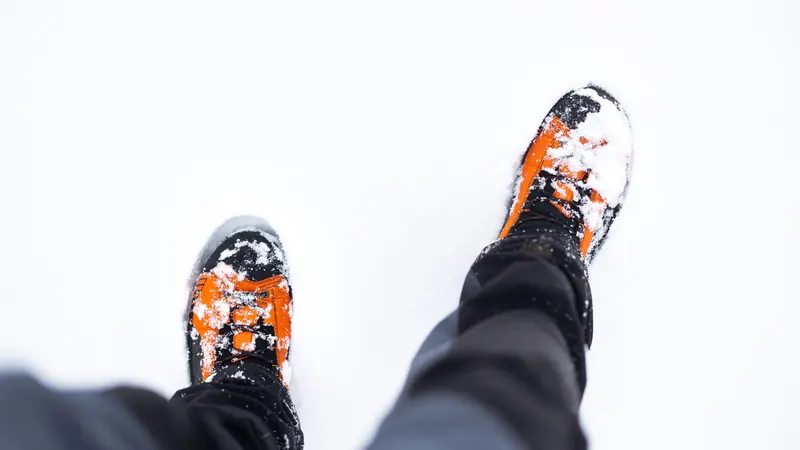
If you shop for boots in a British outdoor shop you will see labels like B1 or B2 on the shelf. They describe how stiff a boot is and which crampons it can take. The system is useful but often misunderstood: it is not an official standard, and boots with the same label can differ. This explainer sets out the ladder from B0 to B3, explains the matching C ratings for crampons and offers practical advice on reading ratings when you buy.
The B and C ladder in one table
Boots (B) and crampons (C) are graded on matching scales. A boot can take crampons with the same number or a lower one.
| Boot rating | Flex | Typical use | Crampons |
|---|---|---|---|
| B0 | Flexible | Walking on paths and hills in non-winter conditions | Not designed for crampons |
| B1 | Stiffened, some flex | Winter hill walking | C1 (strap) |
| B2 | Stiff, heel welt | Steeper snow, easy winter routes, alpine trekking | C1 or C2 (semi-automatic) |
| B3 | Rigid, toe and heel welts | Technical winter climbing and mountaineering | C1, C2 or C3 (automatic) |
B0: walking boots
Most walking boots and all walking shoes are effectively B0, whether or not the shop labels them. They flex at the ball of the foot so you can walk comfortably on paths. That flex is exactly what makes them unsuitable for crampons, which can break or come off on a bending sole.
For most UK walking from spring to autumn, a B0 boot is the right choice. Our best walking boots for UK hills guide compares established models.
B1 and B2: winter hill and mountain boots
B1 boots have a stiffened midsole, often with a shank, that still flexes a little. They are common for winter hill walking in the UK with flexible C1 crampons, which attach with straps or a cradle and do not need welts.
B2 boots are stiffer and have a heel welt, a ledge at the back of the sole for the heel clip of a C2 semi-automatic crampon. They are commonly chosen for steeper snow, easy winter gullies and alpine trekking. They feel clumsier on easy paths.
Our B1 vs B2 boots article compares the two in detail.
Note:Crampons and ice axes need training. If you are new to winter hill walking, learn from a qualified mountain instructor or on a recognised winter skills course, and check avalanche and mountain weather forecasts before you go.
B3: mountaineering boots
B3 boots are fully rigid with welts at both toe and heel for C3 automatic step-in crampons. They are built for technical winter climbing and high mountains, often with insulation. They are not walking boots in any normal sense and are uncomfortable on easy paths.
Few hill walkers need B3 boots. If you are considering them, you are likely heading into technical terrain where instruction and experience are essential.
Why ratings are a guide, not a standard
No official body sets B ratings. They grew up among UK retailers and some makers as a shorthand. Different shops may rate the same boot differently, some boots fall between grades (B1 to B2 is common) and many makers do not use the system at all, describing crampon compatibility in their own words instead.
That is why the sensible approach is to check the boot maker's own product information for crampon compatibility, take your crampons to a shop to check the fit and ask staff with winter experience. Our boot and crampon matcher shows the general pairings, and which crampons fit which boots explains bindings and welts.
Choosing a rating for your walking
If you only walk outside winter conditions, choose by comfort and ground, not by rating. If you plan winter hill walking, a B1 boot with C1 crampons is a common starting point, used once you have learned the skills. If you are moving towards steeper winter routes, discuss B2 boots and C2 crampons with an instructor or experienced shop staff.
Make sure any winter boot fits with thicker socks, and remember that stiffer boots need time to get used to.
Frequently asked questions
Which Scarpa boots are B2? Scarpa describes crampon compatibility on its own product pages. Check the specific model there rather than relying on a retailer label.
Can I put crampons on any walking boot? No. Flexible B0 boots are not designed for crampons. Microspikes are sometimes used on icy paths, but check the maker's advice.
Is a B1 boot good for summer walking? It works, but feels stiffer and heavier than a normal walking boot.
Are B ratings used outside the UK? Mostly a UK convention. Elsewhere, makers describe compatibility directly.
What you need
- Check price on AmazonAffiliate link
Lowa Renegade GTX Mid: leather upper, Gore-Tex
- Check price on AmazonAffiliate link
Zamberlan Vioz Lux GTX RR: leather lined, Gore-Tex
- Check price on AmazonAffiliate link
Lowa Tibet Evo GTX: calf-height leather trekking boot