How-to
How to clean walking boots after a muddy walk
Published
Note: This page contains affiliate links. If you buy through them we may earn a commission at no extra cost to you. Learn more
In short
Knock off loose mud, remove laces and insoles, then scrub the uppers and soles with a soft brush and lukewarm water. Use a boot cleaner rather than household soap or detergent if mud is ground in. Rinse, stuff with newspaper and let the boots dry slowly at room temperature, then reproof if water no longer beads on the surface.
Products for this job
Compare all 7 productsZamberlan Vioz Lux GTX RR: leather lined, Gore-Tex
Check price on AmazonAffiliate linkScarpa Kinesis Pro GTX: 2.4 mm leather, Gore-Tex ePE
Check price on AmazonAffiliate linkMeindl Burma Pro MFS GTX: leather, Vibram Multigriff
Check price on AmazonAffiliate link
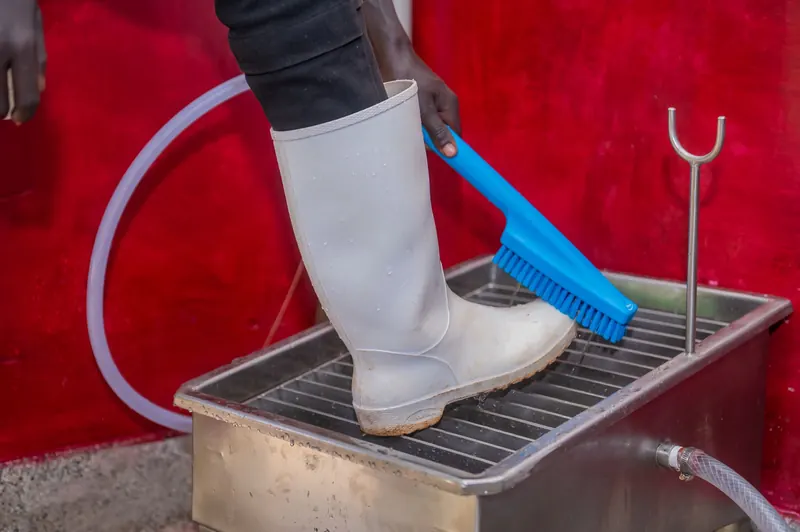
Cleaning boots is the least exciting part of a walk, but it is one of the best things you can do to make them last. Mud and peat hold moisture against leather and stitching, grit works into seams and creases and acts like sandpaper, and dried mud blocks the pores that let a membrane breathe. A few minutes after each muddy walk keeps boots comfortable, waterproof and looking after themselves. Here is how to do it for leather and fabric boots.
Why cleaning matters
Peat and mud are acidic and hold water. Left on leather, they dry it out and can cause it to crack at flex points. Fine grit gets into seams and the weave of fabric uppers, wearing threads and the membrane behind them. Dried mud on the outer stops a Gore-Tex boot from breathing properly, so feet feel damp from sweat.
Cleaning also lets you spot problems early: a lifting rand, a split seam or a worn sole are easier to repair before they get worse.
A quick clean also keeps the sole working. Mud packed between the lugs turns a deep tread into a smooth one, which is why a boot that gripped well on the way up can feel slippery by the end of a boggy day.
What you need
Avoid washing-up liquid, household detergent and soap, which can strip leather oils and leave residues that attract water.
- A stiff brush for soles and a softer brush for uppers (an old nail brush or vegetable brush works).
- Lukewarm water, from a tap or bucket, not a pressure washer.
- A boot cleaner made for outdoor footwear, if mud is ground in.
- Old newspaper or a towel for stuffing.
- A suitable proofer for after cleaning (see our reproofing guide).
Step by step
- 1
Knock the boots together outside to remove loose mud, or let thick mud dry first and brush it off.
- 2
Remove the laces and insoles. Wash insoles separately by hand in lukewarm water and leave them to air dry.
- 3
Brush the soles with a stiff brush, clearing mud and stones from between the lugs.
- 4
Wet the uppers and scrub gently with a soft brush and water, working into seams and creases.
- 5
For stubborn mud, use a boot cleaner as directed and rinse.
- 6
Rinse the inside with clean water if it is dirty or smelly, then pour it out.
- 7
Stuff the boots with newspaper and leave them to dry at room temperature, changing the paper when damp.
Leather, suede and fabric differences
Smooth leather can take a firmer scrub. Once dry, it benefits from a leather wax or proofer to restore water resistance and keep it supple.
Nubuck and suede should be cleaned with a soft brush, as hard scrubbing flattens the nap. Once dry, a brush restores the texture before you apply a nubuck and suede proofer.
Fabric and synthetic boots can be scrubbed gently and rinsed thoroughly. Once dry, a spray-on fabric proofer helps the outer shed water again. Our how to reproof walking boots guide covers products for each.
Brand-specific care
Most boot makers publish care guidance, and some sell their own cleaners and proofers. Scarpa, for example, gives care advice for its leather and fabric boots, as do Lowa, Meindl and Salomon. Methods are broadly the same as above, but check the maker's guide, especially for treated or coloured leathers.
Never put walking boots in a washing machine unless the maker specifically allows it. The heat and tumbling can damage glue, membranes and leather.
After winter and coastal walks
Salt from gritted roads and sea spray can leave white marks and dry out leather. Rinse boots in clean water after walks near the coast or on gritted paths in winter.
Snow and slush soak leather more than you might expect; clean and dry boots thoroughly after a winter walk and reproof before the next one.
Store clean, dry boots somewhere cool and airy, not in a sealed bag or a hot loft. Well-cared-for leather boots can last many seasons; see how long do walking boots last and our leather walking boots guide.
Frequently asked questions
Can I wash walking boots in the washing machine? Generally no. Heat and tumbling can damage glues, leather and membranes.
How do I clean Scarpa boots? Brush off mud, rinse with lukewarm water and follow Scarpa's care advice for the upper material, then proof once dry.
How often should I clean my boots? After every muddy walk is ideal, even if just a quick brush and rinse.
Should I clean the inside? Rinse it with clean water if dirty or smelly, and dry it thoroughly. See smelly walking boots.
What you need
- Check price on AmazonAffiliate link
Zamberlan Vioz Lux GTX RR: leather lined, Gore-Tex
- Check price on AmazonAffiliate link
Lowa Tibet Evo GTX: calf-height leather trekking boot
- Check price on AmazonAffiliate link
Scarpa Terra GTX Women: leather, Vibram Energy II